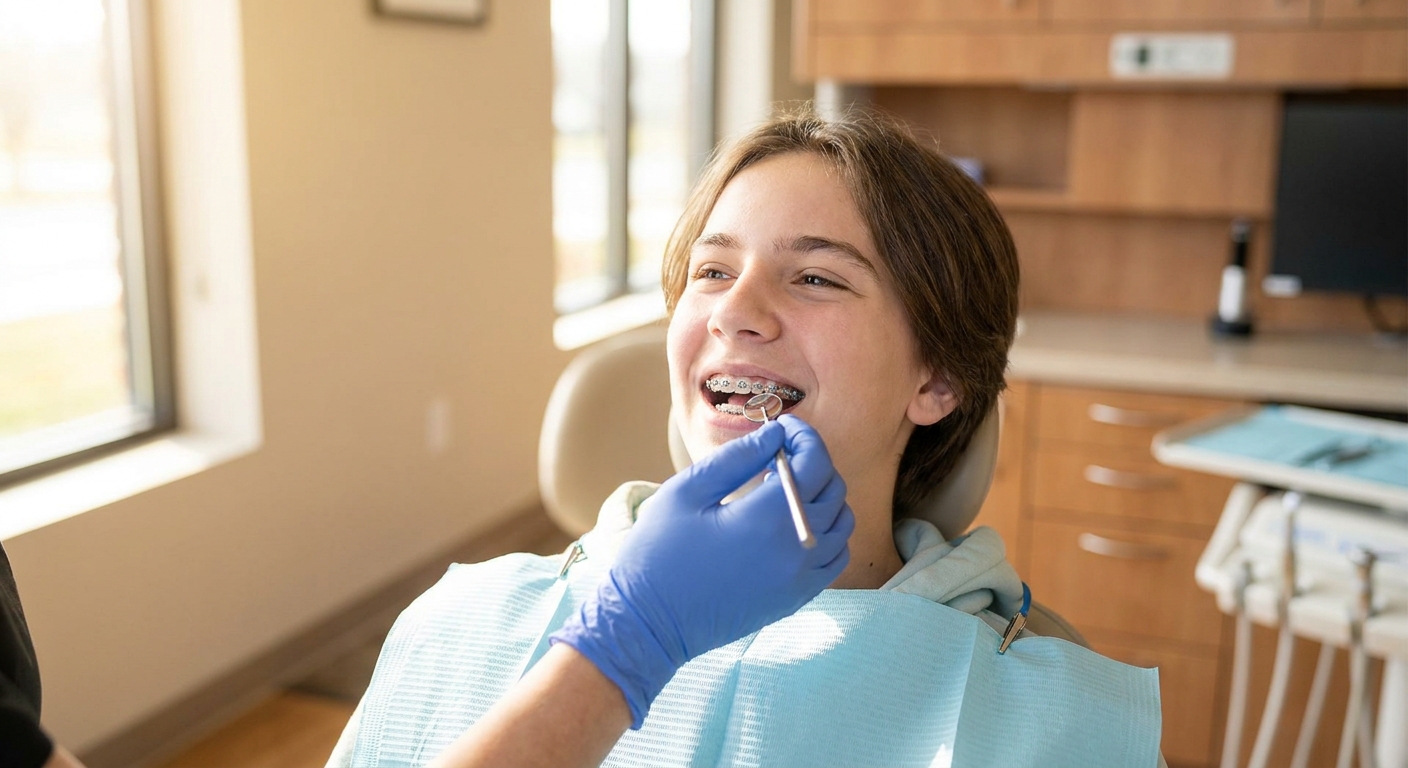

It’s 9 p.m. Your retainer is missing from the lunch tray or cracked in half, and you’re thinking, “It’s just a piece of plastic, so why do I need an appointment?” Maybe it’s your teenager’s retainer, the one that came at the end of months of braces you paid for. Now you’re typing the same question into a search bar: can I buy a retainer without a dentist? The honest answer from Wright Orthodontics is yes. The more useful answer covers what you may gain and what you may risk with each option, and how to look after the smile you already invested in.
It’s a fair question. Retainers look simple, and the options sold online look quick and affordable. But a retainer has one job: to help hold teeth where treatment left them. Whether a replacement can do that may depend on how it was made and whether anyone checks it against your child’s teeth as they are today. Below, the team at Wright Orthodontics walks you through the options, the tradeoffs, the cost math, and what to do tonight.
Can I buy a retainer without a dentist, and what does that actually mean?
Yes, you can buy a retainer without seeing a dentist or orthodontist. Mail-in impression kits, scan-based services, and over-the-counter boil-and-bite trays are all available, and each one is only as accurate as the mold or scan behind it.
First, a quick definition. A retainer is a custom appliance worn after braces or aligners. It is intended to help keep teeth from drifting back toward their old positions. There are three common types:
- Clear plastic trays that snap over the teeth
- Removable wire-and-acrylic retainers, often called Hawley retainers
- Bonded wires glued behind the front teeth
Bonded retainers have to be placed in an office, so every no-visit option is a removable tray.
Here is how the three no-visit options work, in plain terms:
- Mail-in impression kits. You get trays of putty, press them onto your teeth at the kitchen table, and mail them to a lab that makes a retainer from your mold. It’s a bit like ordering shoes from a foot outline you traced yourself. If your pencil slipped or your foot moved, the shoes will still arrive, but they may pinch or slide.
- 3D-scan-based services. A lab prints a tray from a digital scan of your teeth. Sometimes the scan is new, and sometimes it’s an older one already on file. This is like ordering a suit from measurements on record. It can work well when the measurements are current. If your teeth have shifted since that scan, the tray may copy the old position instead of the one you have now.
- Over-the-counter boil-and-bite trays. You soften a generic tray in hot water and bite into it. Think of a one-size glove you stretch until it sort of fits. That may work for a sports mouthguard, but it wasn’t designed around specific teeth in specific places.
A retainer made by your orthodontic team works differently because it involves a fitting. Someone looks at the teeth in front of them, compares them to where treatment ended, and adjusts the retainer so it seats as intended. Here is how the options compare side by side:
| Option | How it is made | Who checks fit against current teeth | Main risk |
|---|---|---|---|
| Mail-in impression kit | Putty mold taken at home | No one in person | A distorted mold may create a tray that presses unevenly |
| Scan-based service | Digital scan, new or on file | No one in person | An outdated scan may copy shifted teeth |
| Boil-and-bite tray | Generic tray molded by biting | No one | May be too loose to hold teeth in place |
| Orthodontist-made retainer | Fresh records plus an in-office check | Your orthodontic team | Requires a visit |
Why does fit matter more than the price tag?
Fit matters because a retainer works by holding each tooth in a specific spot. A tray that is even slightly off may press unevenly or hold very little. Teeth can keep drifting while the retainer looks like it’s doing its job.
Teeth aren’t fixed in place like fence posts. They sit in bone and ligament that keep responding to pressure throughout life. Harvard Health explains that teeth can shift over time, even years after orthodontic treatment, and that retainers are the main tool used to help keep them in place. So the plastic or wire itself isn’t really what you’re paying for. What you’re paying for is the hold, and that depends on the fit.
Picture what can happen when the fit is off. A tray made from a slightly warped home mold might feel snug, but that snugness can come from pressure in the wrong places, nudging a tooth instead of holding it. A loose tray feels comfortable, and that’s part of the problem: it may just sit there while a front tooth slowly rotates. A cracked tray can lose its grip along the crack and develop sharp edges. An old tray that was left in a hot car or run through the dishwasher can warp enough to stop working, even though it looks almost the same.
None of this means every outside retainer will fail, and experiences vary from person to person. It does mean you can’t tell from looks alone whether a retainer is holding teeth correctly. Many parents only learn something is wrong when a gap opens up or a straight tooth starts to overlap its neighbor. By then, the question is bigger than a retainer. It may be whether some of the original correction needs to be revisited.
What does an orthodontist visit actually buy you?
An orthodontist visit gets you a retainer checked against the teeth your child has today, not the teeth in an old mold. You also get someone who can discuss which type may suit your child’s treatment and give you a clear price before you commit.
At Wright Orthodontics, retainers are part of comprehensive family care, not an afterthought once the braces come off. The practice treats crooked teeth, crowded teeth, gaps between teeth, and bite problems, and a retainer is intended to help protect each of those corrections over the long run. Think of the “after” photo from the day your child’s braces came off. The retainer’s job is to help keep that smile in place in the years ahead.
When you come in for a replacement, the Wright Orthodontics team starts by looking at your child’s teeth and bite as they are now. They compare that to where treatment finished and check for early signs of shifting. If something has moved, you find out before a new retainer is made from the wrong position.
From there, the Wright Orthodontics team helps you choose a type. A teen who finished traditional metal braces or clear braces may need a different retainer than a parent who finished clear aligners. A child who often loses retainers may need a different option than one who wears them faithfully but cracked one in a backpack. The team takes fresh records, makes the retainer, and checks at the fitting that it seats evenly and feels right. They also go over how long and how often to wear it. If your child gets nervous at appointments, the welcoming staff explain each step before they do it. You can read more about your options on our retainer services page.
There’s also a professional reason an in-person step may matter. The American Dental Association has adopted policy discouraging direct-to-consumer dental services that skip an in-person exam, because no one can evaluate what they can’t see. For a parent, the takeaway is that the visit is where someone with training looks at your child’s mouth and talks with you about what it may need.
How do you compare the real cost of a retainer?
Compare the lifetime cost, not the sticker price. A retainer that fits the first time and isn’t replaced early may cost less over the years, though every family’s situation is different.
Picture three possible versions of the same story. In the first, you order a low-cost tray online, it arrives feeling off, and you reorder. Then you end up at an orthodontist anyway, so you’ve paid for two retainers. In the second, the online tray seems fine and your teen wears it for months, but a gap slowly reopens. Now you may be facing a conversation about more orthodontic work, which can cost more than a retainer. In the third, your teen gets a retainer fitted in person, keeps it in its case, and wears it until it naturally wears out. That third version has a higher price on day one and may have a lower cost over the years.
How much do orthodontic retainers cost?
Most retainers cost a few hundred dollars per arch, depending on the type and how it’s made. These are typical national ranges to help you plan, not Wright Orthodontics pricing:
| Retainer type | Typical cost range (per arch) | Notes |
|---|---|---|
| Boil-and-bite tray (over the counter) | Under $50 | Not custom, not designed around specific teeth |
| Mail-in or scan-based tray | About $100 to $300 | Often sold in sets; no in-person fit check |
| Clear plastic retainer from an orthodontist | About $100 to $500 | Fitted and checked against current teeth |
| Hawley (wire-and-acrylic) retainer | About $150 to $600 | Adjustable; durability depends on care |
| Bonded (permanent) retainer | About $250 to $550 | Placed in the office behind the front teeth |
For the exact number for your child, ask the Wright Orthodontics team at your consultation. You’ll know the price before anything is made.
What factors affect retainer cost?
Several things move the price up or down:
- Retainer type. Clear trays, Hawley retainers, and bonded wires use different materials and take different amounts of time to make and fit.
- One arch or both. Many patients need a retainer for both the upper and lower teeth, which roughly doubles the cost.
- Sets versus singles. Some options come as a set of trays, which costs more upfront but gives you a backup.
- New records. If teeth have shifted, fresh scans or impressions may be needed before a replacement can be made.
- What your treatment plan already covers. Some treatment fees include the first retainers or a replacement.
- Insurance benefits. Coverage, lifetime maximums, and age limits all change what you pay out of pocket.
Is the retainer cost included in braces treatment?
Often, yes, at least for the first set. Many orthodontic offices build the first retainers into the total treatment fee for braces or aligners because retention is part of finishing treatment. Replacements for lost or broken retainers are usually a separate charge, and some plans include one replacement within a set period. Every practice handles this a little differently, so it helps to ask the Wright Orthodontics team what your child’s treatment plan includes. That way you know ahead of time which retainers are covered and what a replacement would cost if it’s ever needed.
How much does a replacement retainer cost?
A replacement retainer usually costs about the same as a new one of the same type, often a few hundred dollars per arch. The final price depends on the type, whether new records are needed, and what your insurance or treatment plan covers.
If the teeth haven’t shifted, a replacement can often be made from existing records. If they have moved, the Wright Orthodontics team may need to take new records first, and they’ll talk with you about whether a retainer alone is appropriate. Bringing in the old retainer, even in pieces, can help them assess that.
Are orthodontic retainers covered by insurance?
Sometimes. Coverage depends entirely on your plan, and some plans cover retainers as part of orthodontic benefits while others exclude replacements.
Wright Orthodontics accepts Cigna, Humana, MetLife, and Blue Cross Blue Shield, along with cash pay. Some orthodontic benefits include retainers. Some count replacements against a lifetime maximum that braces may have already used up. Others don’t cover replacements at all. Before you buy anywhere, call your insurer and ask these questions:
- Does my plan cover replacement retainers, and how often?
- Has the orthodontic lifetime maximum already been used?
- Is there an age limit on orthodontic benefits?
- Do I need approval before the retainer is made?
Then share what you learn with the Wright Orthodontics office, and the team can help you see how it applies. Asking first may help you avoid paying out of pocket for something your plan could help with.
How long does a braces retainer last?
Lifespan varies with the type and with care. Clear plastic retainers often last from several months to a few years, while Hawley retainers and bonded wires may last many years. Most people are advised to wear some form of retainer long term, so plan on replacing removable ones from time to time.
How long a retainer lasts depends on how it’s worn and stored. A few simple habits may help:
- Keep the retainer in its case every time it leaves the mouth.
- Avoid wrapping it in a napkin, because that’s how retainers end up in the trash.
- Keep it away from hot water, the dishwasher, and a car parked in the Arizona sun, since heat can warp plastic.
- Store it out of reach of pets, because dogs love chewing them.
And if you notice a crack, bring the retainer in before it breaks the rest of the way. An early check may save you time and worry compared with a full replacement after it fails.
What should you do tonight if your retainer is lost or broken?
Tonight, hold off on a quick fix, save any pieces, and don’t force a retainer that no longer fits. Tomorrow, contact Wright Orthodontics and ask for a retainer check and a quote at a consultation.
Here is a plan for the next 12 hours:
- Pause the shopping. A late-night order locks you into a mold or scan no one can check. One night of waiting is a small cost compared with weeks of wearing a poor fit.
- Save everything. Put any broken pieces, or the whole retainer if it’s cracked, in the case. The old retainer helps the team see what happened and how the fit may have changed.
- Don’t force it. If a retainer won’t seat without hard pressing, or it causes sharp pain, take it out. Forcing a tight retainer can stress teeth that have already moved.
- Check the fit if it’s still whole. A well-fitting retainer generally snaps in with light, even pressure, sits flat without rocking, and doesn’t leave one tooth feeling pushed harder than the rest.
So how do you know whether a crack can wait? A small hairline crack with no sharp edges, one that doesn’t change how the retainer seats, can usually wait a short time for an appointment. Call soon and ask the Wright Orthodontics team whether your child should keep wearing it until then. If the retainer is broken in pieces, has sharp or jagged edges, rocks when seated, or no longer goes in, take it out and get seen promptly. If your child has a bonded wire behind the teeth that comes loose or breaks, call right away. A loose wire can poke the tongue or cheek, and the teeth it was attached to are no longer supported by it.
If the retainer is lost, resist the urge to let your child go without it “for now.” The longer teeth go without a retainer, the more chance they have to drift. Starting a replacement promptly is generally the gentlest option for both your child and your budget.
Wright Orthodontics serves families across Mesa and San Tan Valley. The same focus on convenience behind the practice’s same-day treatment start options shapes every visit, including retainer checks. The welcoming staff work to make visits comfortable, so your teen doesn’t dread coming in and you leave with a clear next step.
What else do families ask before replacing a retainer?
Most of the remaining questions come down to fit, coverage, and timing. Here are short, direct answers.
Can I buy a retainer without a dentist?
Yes. Mail-in kits, scan-based services, and boil-and-bite trays are all available without a visit. However, the fit depends on the impression or scan behind them, and no one checks it against your teeth in person.
Are online retainers as good as ones from an orthodontist?
Quality depends on how accurate the impression or scan is and whether it matches your teeth as they are now. An orthodontist can check fit in person and look for signs of shifting. Experiences vary.
How do I know if my retainer still fits?
Warning signs include a tight or loose feel, pressure on one tooth more than the others, rocking when seated, or visible cracks. A good next step is to have the Wright Orthodontics team check it.
Does insurance cover a replacement retainer?
It depends on your plan, so check your benefits and ask the office. Wright Orthodontics accepts Cigna, Humana, MetLife, and Blue Cross Blue Shield, plus cash pay.
Will a new retainer hurt?
A new retainer may feel snug for the first few days, which many people find normal. Sharp pain or a retainer that won’t seat without force is not typical, so call the Wright Orthodontics office if that happens.
What should I do if my retainer cracks but isn’t broken?
Bring it in before it fails completely so the Wright Orthodontics team can assess it. Avoid wearing a retainer with sharp edges or one that feels off when it seats.
Can I just stop wearing a retainer if I lost it?
Teeth can shift when a retainer isn’t worn, so getting a replacement promptly is generally better than waiting.
Ready for a clear conversation instead of a late-night guess? Ask for a retainer quote at a Wright Orthodontics consultation, serving families in Mesa and San Tan Valley. Bring your child’s current or broken retainer so the team can check it against their teeth. Even a retainer in pieces is worth bringing, because it can show how the fit may have changed.
Get a Retainer That Fits Your Smile
Buying a retainer online can feel like the simple, budget-friendly shortcut, but it is fair to wonder whether it will really fit your teeth and keep them where they belong. The team at Wright Orthodontics can talk through your situation and your options so you are not guessing. If you live in San Tan Valley, Mesa, or nearby, call the office and let us help you take the next step with confidence.
This article is general information and not a diagnosis or treatment recommendation. Individual needs and experiences vary, cost ranges are general estimates, and insurance coverage depends on your specific plan.