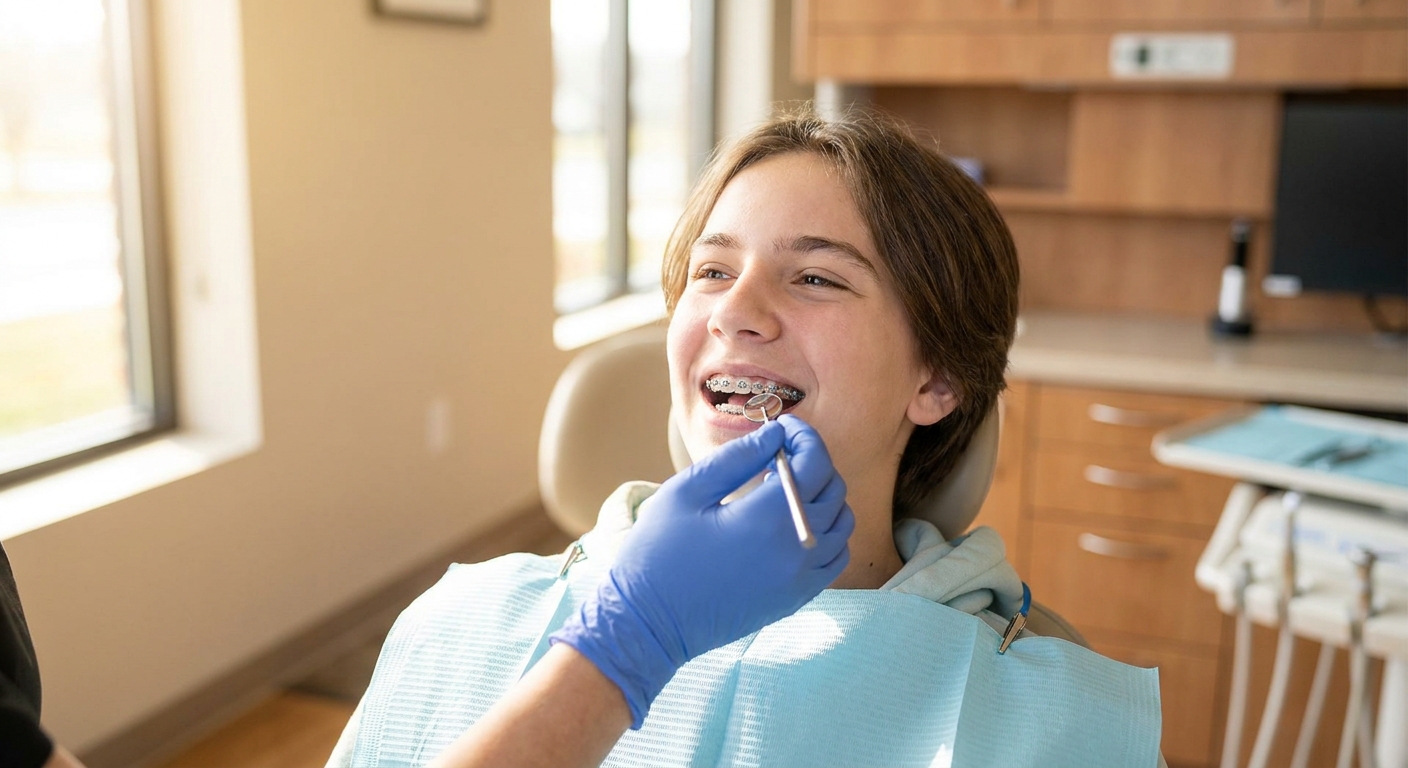

Your child walks out of Wright Orthodontics with new braces, and the first question in the car is “Can I still eat pizza?” You want to say yes. You just made a real investment, and you do not want to police every meal for the next 18 months. But you also know that one broken bracket means another appointment, another bill, and more time in braces. So what is not allowed with braces? There are four main things: hard foods, sticky foods, chewing on objects that are not food, and contact sports without a mouthguard. Pizza can stay on the menu. The rest of this guide explains why each rule exists, what to serve instead, what treatment costs and how families pay for it, and what to do when something breaks anyway.
Why Can One Bad Bite Affect Your Progress?
Braces only work while every bracket stays glued in place and the wire keeps its shape. A hard or sticky bite can break that bond or bend that wire, and the tooth under it then may stop moving the way your child’s plan intended.
Here is how braces work. Each bracket is bonded to the front of a tooth with dental adhesive. A thin archwire runs through all the brackets and is held in place by small elastic ties. The wire is shaped to match the smile your orthodontist is aiming for, so it presses gently and steadily on each tooth. Over time, the bone around each tooth slowly reshapes in response, and the tooth shifts into its new spot. The process depends on low, constant pressure, because teeth respond to steady force rather than sudden force.
A bite into a frozen candy bar or a handful of almonds sends a sharp, concentrated force straight into one small bracket. The adhesive is strong enough for normal chewing, but it is not built for that kind of hit, so the bracket can pop off or the wire can bend. A bent wire is easy to miss because it still looks fine at a glance, yet it now pushes the tooth in a different direction until someone corrects it.
That is why the rules are about mechanics, not about being strict. Wright Orthodontics treats people with misaligned teeth, malocclusion, crowded teeth, gaps between teeth, crooked teeth, and bite problems, and each of those cases depends on the wire doing its job across the whole mouth. Closing a gap between two front teeth and working on a crowded lower arch both rely on the same continuous wire, so one broken bracket can stall the tooth it was guiding. If your family ends up choosing clear aligners instead, the food rules look very different. Aligners come out for meals while brackets stay on all day, as this comparison of traditional braces and aligners from the University of Iowa College of Dentistry explains. For fixed braces, whether traditional metal braces or clear braces, protecting the hardware helps protect the timeline.
What Is Not Allowed With Braces When Your Kid Sits Down to Eat?
Hard, crunchy, sticky, and chewy foods are the ones to avoid, because they either crack brackets on impact or pull them off the tooth. The good news is that almost every one of them has a softer swap that still feels like a treat.
The ADA’s MouthHealthy guidance on braces points families toward the same habits orthodontists repeat at every visit: steer clear of foods that can damage the appliance, and keep teeth clean around the brackets. The rule itself is simple. The hard part is knowing which everyday foods fall into the risky group, because many of them seem harmless until a bracket comes loose in the middle of dinner.
Here is a useful test to teach your child. If a food crunches loudly, sticks to your fingers, or has to be bitten with your front teeth, stop and change how you eat it. That one question catches most risky foods before they cause trouble, and it gives your child a way to decide without asking you every time.
Hard Foods That Crack Brackets on Contact
Hard foods break brackets because they focus all of your child’s bite force on one tiny point. The worst offenders show up in lunchboxes and snack drawers every day:
- Ice. Chewing ice is one of the fastest ways to crack a bracket or bend a wire. Let it melt in the drink instead.
- Popcorn. Unpopped kernels are rock hard, and the thin hulls wedge between brackets and gums. Puffed corn snacks that melt in the mouth make a better movie-night swap.
- Nuts. Whole almonds and peanuts are dense and small, which is exactly the kind of force brackets cannot handle. Smooth nut butter gives the same flavor.
- Hard candy and lollipops. Kids tend to bite down once the candy gets small. Soft chocolate without nuts or caramel is an easier choice.
- Whole apples. Biting into an apple with the front teeth can lever brackets right off. Thin apple slices, chewed with the back teeth, work fine.
- Raw carrots. Steam them, roast them, or shred them into salads and wraps.
- Corn on the cob, hard pretzels, and hard taco shells. Cut corn off the cob, switch to soft pretzels, and pick soft tortillas.
Pizza falls into a middle zone. The cheesy center is fine, but the hard outer crust can snap a bracket, so tear off the crust edge or cut slices into small pieces and chew with the back teeth.
Sticky Foods That Pull Brackets Off the Tooth Surface
Sticky foods are risky for a different reason. Instead of cracking the bracket, they grip it and tug it away from the tooth every time your child chews. They also stretch elastic ties and leave sugar packed around the brackets for hours.
The main ones to skip are caramel, taffy, gummy candy, fruit snacks, licorice, and chewy granola bars. Gum belongs on this list too. Most orthodontists ask patients to skip gum entirely during treatment, so check with the team at Wright Orthodontics before your child chews any kind. Tough, chewy foods like beef jerky and thick bagels fall into the same group, because they take a lot of pulling to chew.
Good replacements are easy to find. Yogurt, pudding, smoothies, frozen yogurt, soft cookies, and melt-away chocolate all satisfy a sweet tooth without tugging on brackets. Sugary drinks will not break anything, but sipping them all day leaves sugar sitting around the brackets, which is why water is the best everyday drink. If your child does have something sweet, a quick rinse or brush afterward helps.
Your Child’s Pencil Habit Can Break Brackets Faster Than Candy
Food is only part of the picture. Chewing on objects that are not food puts uneven, repeated pressure on brackets, and the damage adds up even when no single bite feels hard. Pens, pencils, fingernails, straws, and ice are the usual culprits, and the fix starts with noticing when the habit happens.
You might be thinking that your child does not even realize they do this. That is usually true, and it is exactly why this habit causes so many broken brackets. Food rules are easy to remember at mealtime, but a pencil cap during math homework or a fingernail during a tense video game happens on autopilot. Each bite pushes on the same one or two brackets from an odd angle, and over days or weeks the adhesive can weaken until the bracket gives way.
The most helpful step is to find the trigger. Some kids chew when they are focused, bored, or nervous, so watch for the pattern for a few days: homework time, the car ride to school, video games, or the minutes before a test. Once you know when it happens, you can put something else in their hands. A stress ball, a fidget tool, or a smooth stone in a pocket gives anxious hands something to do. Pencils without erasers to gnaw on, short nails, and a water bottle that does not invite chewing all help too.
Opening packages, bottle caps, or tags with teeth falls into the same group. It looks quick and harmless, but it puts real force on the front brackets, so keep scissors easy to grab in the kitchen and the car. And if you wear braces yourself, the same habits apply to you. Adults wear braces too, as Harvard Health notes, and Wright Orthodontics offers adult orthodontics alongside children’s care for exactly that reason. Chewing a pen at an office desk breaks brackets just as easily as chewing one at a school desk.
Does Your Young Athlete Really Need a Mouthguard With Braces?
Yes. Any child in braces who plays a contact sport, or any sport where a ball, stick, or elbow can reach the face, should wear a mouthguard. The ADA’s MouthHealthy resources recommend mouthguards for sports, and braces raise the stakes.
When a soccer ball or a teammate’s shoulder hits the mouth, two things can happen. The force can break brackets or bend the wire, which brings the same problems as biting something hard. The second risk is one parents do not always picture: the lips and cheeks get pushed hard against the brackets and can be cut. A mouthguard puts a cushion between the hardware and the soft tissue around it.
Not every mouthguard is a good fit for braces. Some store-bought guards are made to mold tightly around the teeth, which leaves no room for brackets or for teeth that are still moving. Guards made for orthodontic patients are shaped with extra space for the hardware. Ask the welcoming staff at Wright Orthodontics which type makes sense for your child’s sport and stage of treatment, especially if you are planning a same-day treatment start right before a new season begins.
If your family spends weekends at fields and courts across Mesa and San Tan Valley, plan the gear the same way you plan snacks. Keep the mouthguard in the sports bag, not on the kitchen counter. Pack braces-friendly tournament food like soft sandwiches, banana slices, string cheese, and yogurt tubes, so your child is not grabbing hard pretzels or chewy fruit snacks from the snack stand between games.
What Do Skipped Rules and Missed Appointments Mean for Your Family?
Broken brackets and missed adjustment visits add extra appointments now and may extend time in braces later. Each repair or skipped visit pauses progress on the teeth involved, and a pattern of them may stretch the whole plan.
Think of the wire as a set of instructions that slowly runs out. When your orthodontist places or adjusts the wire, it pushes the teeth toward the next step. As the teeth reach that position, the pressure fades. Adjustment visits are spaced to add new force right around the time the old force has done its work. When a visit gets skipped, the teeth mostly sit still and wait. Nothing moves backward in a dramatic way, but the calendar keeps moving while the teeth do not.
A broken bracket left unrepaired is a bigger concern. Without the bracket, that tooth is no longer guided by the wire and can drift out of line with its neighbors. When it finally gets fixed, the orthodontist may need extra time just to bring that tooth back to where it was before moving forward again. One slip that gets fixed quickly is rarely a big deal. Several breaks over a few months, or one that waits weeks for a repair, is how treatment can end up running longer than your family planned.
This is also where costs add up for a busy parent. Each unplanned visit means time off work, an afternoon pulled from school, and a drive to the office. Following the food rules and keeping scheduled visits gives your child’s treatment its best chance of staying on track, and the team at Wright Orthodontics builds its comprehensive family care around that partnership. If a schedule conflict or a habit keeps getting in the way, tell the staff early, because solving a scheduling problem in a phone call is far easier than addressing a delay later.
Planning for Braces in Mesa: Cost, Payments, Age, and Options
Knowing the rules is easier when you also know what you are signing up for. If your family is still deciding, these are the questions parents ask most before treatment starts.
How Much Do Braces Cost in Mesa, AZ?
The cost of braces in Mesa, AZ depends on the type of treatment and how long your child needs it, and Wright Orthodontics gives you a clear estimate at your orthodontic consultation so there are no surprises later.
Several things shape the final number: how complex the case is (mild crowding versus a larger bite problem or malocclusion), which type of braces you choose, and how long treatment is expected to last. Insurance also matters. Wright Orthodontics accepts Blue Cross Blue Shield, Cigna, Humana, and MetLife, along with cash pay. Ask the front desk to check your plan’s orthodontic benefits before treatment begins, so you know what your plan covers and what your share will be. This is also a good moment to ask how repair visits are handled, since a broken bracket is a common concern.
Can You Pay Monthly for Braces?
Some families spread the cost of braces over the length of treatment instead of paying it all at once, and you can ask the Wright Orthodontics team about payment options at your consultation. When you talk through payments, ask how your Blue Cross Blue Shield, Cigna, Humana, or MetLife benefit fits into the plan, whether the monthly amount covers repairs and retainers, and what happens if your coverage changes partway through. Having those answers in writing makes the whole process feel more predictable.
What Age Is Right for Braces?
Many children get braces between about ages 9 and 14, once most of their permanent teeth have come in, but the American Association of Orthodontists recommends a first orthodontic checkup by age 7.
That early visit does not mean your child will get braces at 7. It simply lets an orthodontist spot bite problems, crowded teeth, or jaw growth issues while they may be easier to guide. Some kids need nothing more than periodic checkups until the timing is right. And there is no upper age limit: adults can work on straightening their teeth too, which is why Wright Orthodontics offers both children’s and adult orthodontics as part of its comprehensive family care. Parents and kids can even be seen by the same team.
What Types of Braces Are Available?
Wright Orthodontics offers three main options, and the right one depends on your child’s teeth, age, and habits:
- Traditional metal braces. Strong, reliable, and well suited to many cases, including complex bite problems. These are the braces the food rules in this guide are written for.
- Clear braces. These work the same way as metal braces but use tooth-colored brackets that blend in. The same food and habit rules apply.
- Clear aligners. A series of removable trays that shift teeth step by step. They come out for meals, so food rules are looser, but they only work if they are worn most of the day.
If your teen worries about how braces will look, clear braces or aligners can help. If you worry that your child will lose removable trays, fixed braces may be the simpler choice. The team can walk you through each option at your visit.
What Are Some Reasons People Choose Braces?
It helps to remember why all these rules are worth following. Braces may help with:
- A straighter smile that your child feels proud to show in photos and at school.
- A healthier bite, which helps teeth meet evenly when chewing.
- Easier cleaning, since straight teeth leave fewer tight spots for food and plaque to hide.
- Less uneven wear on teeth over time when the bite lines up properly.
- More confidence, which many parents say is a change they notice.
A Bracket Just Broke. Now What?
Even with careful habits, breaks happen. When one does, stay calm, check what happened, protect your child’s mouth from anything sharp, and call Wright Orthodontics. The team can tell you whether the problem needs a visit right away or can wait until the next scheduled adjustment.
First, take a look. A loose bracket often still hangs on the wire and spins around. A poking wire usually shows up as a sore spot on the inside of the cheek. If a bracket comes off completely, save it in a small bag and bring it to the appointment. Do not try to glue anything back on, and do not cut the wire at home.
Next, make your child comfortable. Orthodontic wax pressed over a sharp wire end or a loose bracket stops the rubbing. A clean pencil eraser or cotton swab can sometimes nudge a wire into a gentler position, and warm salt water rinses soothe sore spots. If your child took a hit during sports and a tooth feels loose or chipped, or the mouth is bleeding and swollen, get care right away.
Then call the office. Most loose brackets are not emergencies, but the staff will want to know about them so they can plan the repair. Wright Orthodontics serves families from its locations in San Tan Valley and Mesa. Plans handle repair visits differently, so ask the front desk how yours treats them before you assume anything. Adults comparing options can also read about clear braces for adults with Cigna dental.
Quick Answers Parents Ask After the First Week
Can you eat pizza with braces?
Yes. Skip or tear off the hard outer crust, cut the slice into smaller pieces, and chew with the back teeth.
What happens if my child accidentally eats something not allowed with braces?
Have them check for a loose bracket or bent wire right away. If anything looks or feels different, call Wright Orthodontics. One slip rarely causes lasting trouble, but repeated slips add up.
How much does it cost to fix a broken bracket?
It depends on your plan and the repair needed. Wright Orthodontics accepts Blue Cross Blue Shield, Cigna, Humana, MetLife, and cash pay, and the front desk can explain what to expect before the visit.
Can my child chew gum with braces?
Most orthodontists ask patients to skip gum during treatment because it sticks to brackets and wires. Ask the team before chewing any kind.
Does my child need a mouthguard for sports with braces?
Yes, for any contact sport or any activity where the face can take a hit. Ask the staff which type of guard works with your child’s braces.
Will broken brackets or missed appointments make treatment longer?
They can. Each unrepaired bracket or skipped adjustment pauses progress on those teeth, and several of them may push back the finish date.
Start Treatment Knowing Exactly What to Avoid
Call Wright Orthodontics in San Tan Valley or Mesa to schedule your orthodontic consultation. You will get a clear cost estimate, a look at whether traditional metal braces, clear braces, or clear aligners fit your child, and the full rundown on what is not allowed with braces, so you can protect your investment from day one. Ask about a same-day treatment start if your family is ready to begin, and expect welcoming staff who work to make it a memorable patient experience. Here is one thing you can do tonight: walk through your pantry, set aside the hard and sticky snacks before the brackets go on, and stock a few soft favorites your child already likes. When the first car ride home comes with a “What can I eat?” question, you will already have a good answer waiting.
Ready to Keep Your Braces Journey on Track?
Understanding what to avoid is just the beginning,following through takes daily commitment, and sometimes you need guidance specific to your treatment. If you have questions about foods, activities, or care routines that could affect your braces, the team at Wright Orthodontics in San Tan Valley and Mesa is here to help you protect your investment and stay on schedule. A quick conversation can give you the clarity and confidence you need to navigate your orthodontic treatment successfully.
Treatment outcomes vary among individuals, and results depend on following the specific instructions your orthodontist gives for your child’s case.